Friday, August 29, 2008

Summer Reading : Mars, a text!


Patrick Chapman's latest collection of poetry displays the characteristics which have earned him praise and recognition as one of the more interesting voices of his generation of Irish poets.

The poems in this volume - ranging as they do over broad periods of time and experience – can sometimes appear to be ‘quare bedfellows’. However, this is far from negative - if anything it emphasises the diversity and range of thought and expression in Chapman's poetry. Heated relationships, cold wars, inner and outer space all combine here to provide a backdrop for stories of the heart, mind and body in a collection that exhibits distinctly cinematic qualities. There's a touch of the Noir here - not unrelenting darkness - more highlighted angles and delineations of a gamut of memorable characters. We meet a Queen of her own private Gethsemane, a vampire-priest-ringmaster, as well as certain politicians and ‘vast and cool intelligences' opening church and shopping malls in virgin territories. Musicians and other cultural icons create a sinewy linkage between the poet and his environment.

Throughout, there's a healthy dose of surreal humour. However, one of the strengths of this collection is Chapman's ability to present humour without resorting to glibness. Here it is part of the full tableaux of human experience, woven into love, fear, bewilderment and hope. There's a fair deal of sex too.

Overall the writing is underpinned with a deceptively casual sense of craft (this is Chapman's fourth collection, following on from a recent book of stories. He's also written films and audio plays). Towards the end, the collection heads into (literally) darker waters. Immersion recurs as a theme along with various extinctions, such as the young fisherman in the poem What You Leave Behind, lost at sea while providing for his his family;

“In dying he has lumbered them with boat-wreck
And some lately settled fear an tí
Squatting in the drowned man’s chair.”


At first, this collection charms with its immediate vibrancy - then merits re-reading to tap into some of the deeper currents at work below the surface of this skillful, considered writing.

More info here.

The SLANTy Clause


Myself and other IGI illustrators currently have an exhibition running at Ormeau Baths Galleries, Belfast. You can read all about it over on Scamp. SLANT is all about putting your own stamp on a favoured painting. The tagline is 'imitation : flattery or battery" and there's everything from straight homage to wholesale re-invention. My own painting (above) is based on Dali's Premonition of Civil War. It's ALL good - but some of my favourites are paintings by PJ Lynch, Kevin McSherry and Jonathon McHugh. Also at the same venue is The AOI's Images 31 exhibition, featuring the cream of UK illustration. So, well worth a visit! >>>>>>> UPDATE!!! You can now check out a step-by-step of the above image over here on the IGI blog SCAMP! Make sure and leave a comment!

Tuesday, August 26, 2008

Ronnie we hardly Drew ya!


Myself and a bunch of IGI illustrators have marked the recent passing of Ireland's most distinctive singing voice, Ronnie Drew, by putting pen to paper and coming up with a few nice scamps of the great man himself. Check em out here.

Friday, August 15, 2008

Dispatches

Written back in late 2007, but seems appropriate to the current Irish climates;

***

Dispatches

This morning, the patio is a chessboard
Drained of fight, a low contrast
Truce of gritty concrete squares

Slick under furniture pieces disarrayed;
Mouldering victims of a thuggish midnight squall.
Brick red when first assembled, inclemency
Has shrunk their ersatz teak to oldbone grey.

I know they've reached the rotting stage.

The last time they were used, not one
But two seats rent that sunny afternoon,
Their rundles detonating under laden
Celtic tiger arses, ambushed.

***

This poem featured, along with a few others, in issue 2 of Polluto - the 'Apocalypses and Garden Furniture' issue. Now there's a theme and a half - and how bizarre that I actually had a poem which fit nicely!

Monday, August 11, 2008

Jusslyktha! (ahurr, ahurr)


And on, and on, and on she kept flowin - the witch bin around before ma mother born! To turtle or not - this be the interrogative? I believe there's excellent value in real estate in Chelonia at the mo? (Limited designs tho.)

Clucksake!


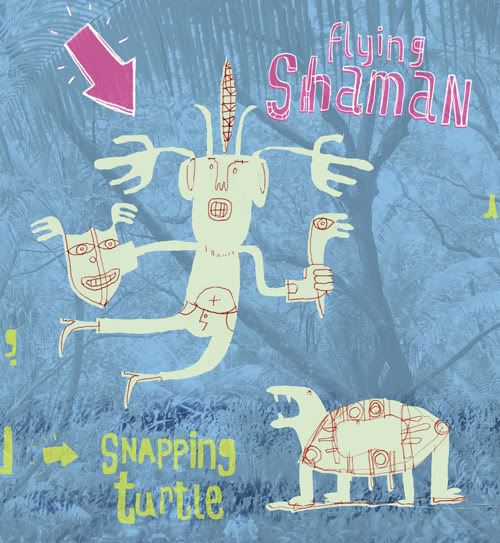
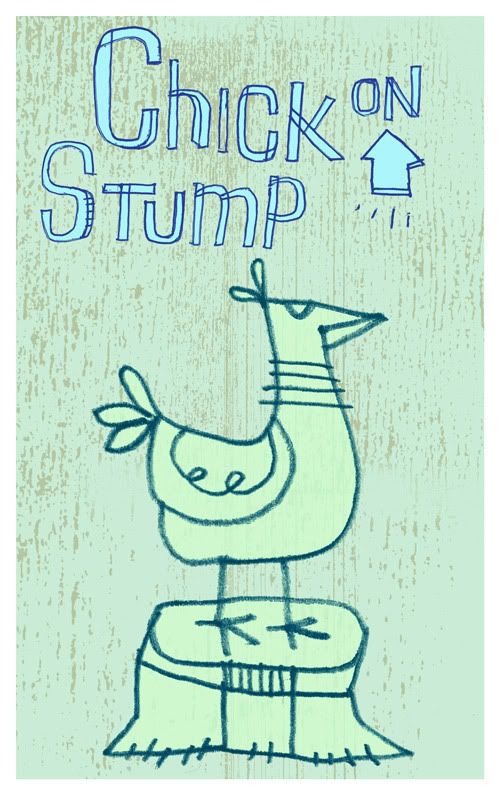
Those damnable best intentions went a-wanderin' again; insulting ladyboys, got beaten up on the tube and had luggage redirected to reykjavik; ended up drinking in shoreditch with japanese kylie fans - hence the infrequency of posts of late. Didn't bother me though - stuck here at home ripvanwinklin' through the biblical deluge that is the Irish summer. Thank goodness for stumped fowl, I say!

Thursday, August 07, 2008

Raccoon in the Restaurant


The good people at the Evening Herald's HQ magazine (Hi Sue!) asked me to review Meridien Theatre Company's production 'Raccoon' which is currently running at Bewleys Café Theatre, during lunchtimes, until August 23rd. You can read that review here

This really is a very good show, so if you're in the Grafton Street area for lunch before the run ends, I'd recommend it highly. The writer is an American named Tom Hall and, based on this play, I'd think his short stories (I'm guessing he's written a few) should be well worth a read. That's if anybody knows where I might find them / him? According to the bumph, he's lived in Mexico, Cork & Wexford but is now based in Dublin. 'Raccoon' also features in a double bill 'The Lost Field' from Meridien - which will be touring nationwide this November - so keep your eyes peeled.

Meridien are a lively and innovative company, with some interesting work in their archive. Their forthcoming production is 'There Are Little Kingdoms' - a play based on the short story collection of the same name by Kevin Barry. Barry was a worthy winner of the 2007 Rooney Prize for this cracking collection of tales from small-town Ireland - one of the best debut collections of recent years. The author himself is adapting the work for stage, so make a note folks, this should be a pretty hot ticket, IMHO.

Wednesday, August 06, 2008

Summer Reading 2 : Some Journals


It’s been a hectic couple of weeks since getting back from hols. Any headway I made in my summer reading has bottlenecked somewhat. However, before what passes for summer these days has flown, here are a few journals whose summer issues I've been stuck into;

The Stinging Fly

The Summer 2008 issue of The Stinging Fly lives up to its now well-established reputation. The regular 'First Passions' feature, where writers discuss their early reading influences, features Vona Groarke, whose recollections range from the first book she ever owned, aged five (or six) to the 'full force gale' of individual poems. There's the usual rigorous selection of innovative new prose - a Stinging Fly trademark by now - alongside a very healthy mix of original poetry. Featured poet Grace Wells exhibits an artful whimsy over seven poems. Reviews include Tom Mathews investigating Wendy Cope's newest collection and Yvonne Cullen absorbing Harry Clifton’s extremely well-received Secular Eden: Paris Notebooks 1994 -2004, among others. The highlight for me is an astonishing story by Desmond Hogan, a writer who has been in the news for less salubrious achievements of late. To simply call 'Old Swords' a story seems understated. This writing is a congealed amalgamation of reference and insight, with innocuous detail and character reminiscence layering and shifting to eventually conflagrate a human life, in all its tawdry hopes and limitations. Fascinating technique!

The Dublin Review

Another journal with impeccable editorial credentials here, the only bum note for this reader being a rather dry essay referencing Henry James - 'On Style and Freedom'. Worthy, no doubt - but perhaps a shade too academic for this slight intellect. Much more satisfactory were two (very) short stories by Kevin Casey, Maurice Walsh's squint into Salvadoran street gangs and a wonderfully evocative trip to Inishbofin in the company of Tim Robinson. Brian Dillon also provides a fascinating perusal of the various manifestations of Marcel Duchamp's 'ready-mades' - somewhat of a misnomer, as Duchamp, cute hoor that he was, held a 'flexible' approach to his own manifestos on what constituted an 'objet d'art'.

Crannóg 18

Bookending the covers with striking images by Jaber Lufti, the summer 2008 issue of Crannóg is crammed full of fine poems and some pretty good prose too! Standouts for me include poems by Fred Johnston, Deborah Moffat, Nicholas Messenger and Maureen Gallagher. My own poem 'A Piece' features here too, bringing the issue to a close on page 57. Thanks for the selection, people!

Pen Pusher 10

I've mentioned before that Pen Pusher is one of the more handsomely produced journals, and this issue is well up to the usual standard in all areas, with a cover illustration by Richard Short - who also contributes a story inside! It's hard to define the editorial policy at work here - but the result is a very classy selection of clean, crisp writing - to match the design perhaps? ;-) Peter Higgins writes on Elmore Leonard, that crime writer beloved by Hollywood. Elsewhere there's striking story 'My Stalker' from Pia Chatterjee, a little madness from Sir Charles Maxwell-House and a couple of somewhat surreal poems from Leah Armstead and Heather Phillipson. Still have to finish reading this one! BTW Pen Pusher have come up with an inspired way for supporters to sponsor their production costs by donating 2p per page - so for a quid you can sponsor a whole issue and get mentioned by name ....unlike us poor loyal subscribers then ;-)

Fiddledy Diddledy Deeeeelicious!


I had the pleasure of attending the opening event of TRADITION:DL (Dun Laoghaire festival of traditional music) last friday. We were treated to a rare solo performance by fiddle virtuoso Paddy Glackin. Glackin is the real deal - a dyed-in-the-wool virtuoso, whose range and deftness were given an airing on the full gamut of jigs, reels and slower airs. On the slower passages, the full range of the instrument's expression was brought to bear in the hands of an obvious master of his art. Some of the other 'tunes' brought out my inner contrarion. (Please bear with me here). Not having been brought up in one of those classic trad-filled environments, I sometimes find the emphasis on 'tunes' in trad a bit chafing. To my (admittedly untutored) ears - the difference between one 'tune' and another can often seem minimal. I must own up to a bit of a knee-jerk rebeliousness when po-faced tradsters talk reverently of newly composed 'tunes'. More often, the composition in question seems to to comprise of inverting a triplet here or transposition of a couple of notes there, when compared to the another 'tune'. Unlike Rhapsody in Blue, for example, much trad stuff is more of a repetitive motif for leppin' around to, no? OK, I'll put my hands up - my name is PJ and I'm a trad dullard! Don't get me wrong - I enjoyed Glackin - just found myself mulling those aspects of 'trad' that irk me during the interval.

After that came the highlight of the evening for me. Spiers & Boden are a couple of young men who are to the forefront of a New Folk revival that seems to be sweeping along nicely in the UK. Also members of Bellowhead and previously part of Eliza Carthy's entourage, these guys know their stuff, have the credentials to prove it, but also display an irreverant attitude and willingness to entertain that often seems lacking in our homegrown folkies. I know, I know - English Folk isn't 'pure' (like ours?). It's all based on dodgy 'revivalism' and nostalgia innit? F*ck that. This was a vibrant and energetic performance of new music that knows (and feeds) its roots. Admittedly, in embracing experimental influences, Carthy et al can sometimes verge on pop music with a folk tinge - but that's no bad thing. Why shouldn't folk music also be popular music? These guys deliver - buy the album - or better still catch them live!

Anyway - a great double bill to kick off this wee festival, more power to its elbow. I'd have loved to make it along to 'The Frost is All Over' on the Saturday night - Dermot Bolger's collaboration with Tony Mac Mahon - but didn't make it back from Belfast in time. Anybody who was there care to fill me in?

Thursday, July 17, 2008

Merrion Square Suntrap?


I made it over to the National Gallery of Ireland yesterday for the third in their series of lunchtime poetry readings during July, in association with Poetry Ireland. I was disappointed to miss the first two due to being abroad - featuring Vona Groarke and Eavan Boland, whose reading kicked off the series.

Yesterday's event featured Catherine Phil MacCarthy, a steadfast presence on the Irish scene; poet, novelist, editor and teacher of creative writing. True to form, her reading, like her work overall, was confident, understated and elegant - occasionally breaching consistently high levels of quality to achieve some remarkably moving passages, as in the chilling poem 'Ultrasound'. Personal highlights were a poem called 'The Deluge', which paired the whimsy of a barrage of Beanie Babies (neighbouring children breaching garden defences) against more biblical considerations. MacCarthy finished up with another fine piece, The Opal, available to read on the poet's website, along with other works from her recent collection 'Suntrap'.

Next up in the series is Gerald Smyth, reading on Weds 23rd July and Harry Clifton brings the series to a close on Weds 30th July. The readings are advertised as being in Room 21 (The Portrait Gallery) but yesterday's took place in the lecture theatre (in the basement). I'd guess they'll remain there. Also some mention of a poetry evening at the NGI this autumn - sounds interesting! Meanwhile, this series is a pleasant lunchtime interlude for anybody in the Dublin 2 area during July.

Tuesday, July 15, 2008

Summer Reading 1: Costa De Stopia


As mentioned earlier, I’m just back from a couple of weeks in Spain. Usually not big fans of the sun holiday scenario, this year the offspring deemed sunshine and a pool to be mandatory elements, so off we flew. And guess what? It was fuppin’ great! Lucky timing too - as borne out by our alarm monitor phoning to say the house alarm was going off back home but not to worry - we weren’t alone - it was probably set off by the torrential rain and hailstones!!!

Between narrowing down the iPod options for best poolside basking music (Air … by a drowsy mile!), glugging ice-cold rosado and experiencing 135kmph rollercoasters, I had plenty of languid reading time. I’d brought a selection of journals, one poetry collection and one novel, but pride of place HAS to go to JG Ballard : The Complete Stories: Volume 1.

Reading Ballard’s dystopian gems under the hot Spanish sun brought on unexpected and eerie synchronicities between his stories and the surreal and artificial landscape of the mass tourist experience. All that packaged recreation, intensive leisure, modular accommodation, shifting sands, glaring skies and polished dereliction. The contrast between the well-watered, palm-shaded apartment enclaves and the dusty, halfshod streets outside seemed spookily similar to some of the environments from the Vermillion Sands stories. The ever-present swimming pools, whether fully functioning or leering from the gaptooth building sites of the stalled Spanish economy, were an obvious Ballard trope. The heaving, oily beaches emphasised references to the Gadarene swine in The Reptile Enclosure. While our apartment may not have had the Thousand Dreams of Stella Vista, humidity-broken sleep produced its own myriad shattered tableaux. The psychotropic correlation of environmental guilt and the slight drainy whiff as the aircon kicked in wasn’t lost on me either!

Considering most of these stories dated from the late 50’s and early 60’s, I was struck once again by Ballard’s uncanny prescience. Admittedly the clunky poetry-tape-producing Verse-Transcriber machines of Studio 5, The Stars seem quaint in the context of today’s digital environment, but - as Ballard states in his introduction – these stories aren’t set in any future, but a ‘visionary present’. The cumulative effect of reading these stories in relative succession led to a vaguely ominous, but not altogether unpleasant, disorientation – peaking in Barcelona. After Ballardian immersion, both the Zoo and the Metro felt bizarrely virtual. But the icing on the cake had to be an offhand mention in a phone conversation that “the Radar had died in Dublin airport”, a few days before we were due to return. Yikes!

All ended well though - an excellent break, to which these stories added a spice of head-swimming, delerious pleasure!

Monday, July 14, 2008

Wolff Enright (not a law firm!)


I only made it to one event during this year's Dublin Writers Festival. The festival coincided with a pretty hectic pre-holiday period for me plus I was a bit word-weary for a while there. However, I did manage to make it along to this event. Couldn't have missed it really, as I admire and enjoy Wolff's writing in a big way. To have him double-heading with the bould Enright was just too good a ticket to pass on.

It was a pretty full house on the night (and very muggy inside - what's the story Project?). First up with the introductions was Niall McMonagle, who then welcomed both writers to the stand. Enright read her story Honey from her recent collection Taking Pictures. This story was originally the worthwhile winner of the inaugural Davy Byrnes Award (for which Wolff had been one of the judges). It's a typical Enright story - as much as such a thing exists? A crackling, vernacular and bleakly humourous narrative of a protaganist whorled up in guilt, grief and gumption, spitting and fidgeting towards some kind of release. Enright is adept at traversing her characters across passages of brittle, iced language compacted into suspended, breathless near-hysteria, only to skid on a word or two into pools of warmth and emotion. So it was here. As Wolff followed her to the podium, he exclaimed that he'd be pleased to hand over the award cheque again - so good was this story. It was a wonderful reading of a classic modern story, IMHO. The good news is that Honey is available to read online over on the Irish Times website. The bad news is that only available by subscription! Here's the link.

Wolff followed up with two of his own classics: Say Yes (which you'll find here) and Bullet in the Brain, (read by T. Coraghessan Boyle in a podcast here). Both are cracking stories - not neccessarily what I would consider his most representative work, so an interesting choice.

After that, we needed a pause to breathe and let the words settle. Then we were off into a somewhat fractured discussion on the short story which, in truth, contained cliche as well as insight. But there were tasty moments too. Considering the merits of the story versus the novel, Wolff opined that Randall Jarrell's (?) somewhat glib definition of the novel as "a work in prose of a certain length that has something wrong with it" could equally be applied to the short story. I also seem to recollect that he commented on the story form having more in common with poetry than with the novel, but my memory might just be channelling Wolff's close friend, Ray Carver on this recollection - I know I've heard him say this.

Discussing the start of a story, Enright said she 'doesn't do' beginnings. Also, she doesn't have much time for those writers who claim not to know whether a piece will become a story or a novel. For her it's one or the other, from the off. She also said something interesting on endings. For her, it's not so much about the endline as the silence that follows it - and how that differs from the silence before the story began. A bit precious maybe, but a compelling consideration.

Also discussing endlines, Wolff commented on Carver's skill in this area, turning the most open and inconclusive lines into a kind of revery. He referenced the endline of Carver's story 'Gazebo' for this. I don't have this to hand just now. Crack a book :-) (I'll add it here later). One area that wasn't discussed was the role of the editor. With so much referencing of Carver, I'd hoped to maybe raise the contentious issue of Gordon Lish's role in paring back Carver's original drafts. But time was limited and I didn't make the cut.

Enright mentioned some significant influences on her as a younger writer, citing Alice Munro in particular as well as a seventies anthology of experimental work, "The Naked I", which brought subjective narrative to the fore. She also spoke of those many, many stories still to be told from the point of view of women, particulary Irish women. A curious moment occured when a female audience member asked both writers for their thoughts on the differences in the short stories of male and female writers. Wolff demurred to Enright, as she had lead the timbre of the discussion in this direction, but the Booker winner was somewhat gobsmacked and flustered by the question. Strangely unsure, I thought, considering how much of her writing drags a raggedy fingernail along the frayed seams of gender politics. For his part, Wolff suggested that there seemed to be more violence in men's writing. To his chagrin, he's had it pointed out that the mortality rate of dogs in his stories is quite high.

Finally, appropriately enough, an anecdote that Wolff shared with us;

The discussion came round to those questions which writers face at events like this, one in particular being "When did you realise you wanted to be a writer?" Where many writers might refer to vague, intuitive urges, Wolff remembered an exact moment from his schooldays, when he would often write exercises on behalf of his classmates (for reward, no doubt). On one such occasion, the recipient of said 'hokey homework' told him 'you know you're good at this.... you should be a writer'. This specific incident planted the idea. On subsequent occasions, having entirely lost contact with this guy, he would refer to the incident in public readings and offer his thanks to the individual. At one such event, a lady stayed behind, quietly made her way over to him and explained that she was the individual's daughter. She explained how her father, like Wolff, had served in Vietnam. Unlike Wolff, however, he returned a scarred and deeply troubled man who moved his family to remotest Alaska, where he sought a precise kind of solitude. If any other settler moved to within four miles of their home, he would up stakes and move even further into the wilderness. Eventually (of course) his wife had had more than enough privation, took the kids and left him to it! Recounting all this to Wolff, the daughter finished with the meek observation, "I guess somebody must've told him he should be a hermit."

Knowing the young Wolff's propensity for 'creative truth', I'd be inclined to take this with a pinch of salt - but a fitting yarn nonetheless, from a master storyteller on a wonderfully interesting and entertaining night.

Hi. Again. At last. (For a while?)

Well now. In spite of many weeks of my non-posting (and the noticeable amount of quality long-term bloggers who are calling it quits) the blogosphere hasn't yet ground to a halt. A good thing? I think so. It's true that maintaining (any sort of quality in) a blog can be aright old chore - but what a great way to make and feed some of those synaptic contacts that internet technology always promised. And waffle freely.

I can't plead any kind of strategic decision behind my own recent lapse in posting. It just came down to being on holidays for the last two weeks and a bunch more weeks of random hectivity (hection?) before I went away (of which, more anon). Anyway, I'm back now - energised, tanned and typing again. Please do let me know if there's anybody left out there. I feel bad for disappearing just as a few people other than myself were starting to drop by. To be fair, I've always referred to my own wee cul-de-sac of the information superhighway as an 'intermittent' blog (Suffering the Intermit, anyone?) and so it has proven to be.

So, please allow me to re-kickstart proceedings by linking to a couple of (still-relevant) reviews which I penned for the Evening Herald before chucking a few more euros into Ryanair's coffers, and which appeared in my absence;

Chekhov via Friel : Three Sisters at The Abbey

Space Drama : Ulla Van Brandenburg at IMMA

Tuesday, June 17, 2008


Synth Eastwood is a creative collective that's been putting some interesting multimedia shows on for quite a while now. Well worth checking out! This is an image I submitted for their recent flags & anthems show.

Friday, May 23, 2008

SING - its the weekend!


Yay! Funky Friday and the sun is OUT! Raise a holler so you know you're alive - rip the veils from yer eyes and set bravely forth into the tangled byways of Saturdayville (by way of your tipple of choice). Amach with ye!!!

The ONLY Irish band


Right now, this is IT! The new album from Republic of Loose and it leaves everything else on it's face, bleeding from the pores and streaming snot into the gravel. Standouts: Got, 23 Things I don't like, 13 Shots, I.R.I.I.S.H., I like Moosik and Mik Pyro's impression of Van on My Brain. Urrrrrrrrngh - Good God - they gotz the funk - and the stuff. Nothing else in the country comes close (excluding resident masked aliens and one chilly plucker of alt-victoriana). Isabel Reyes-Feeney is the illustrator who's created most of the ROL graphics (her vocals feature on the album too!) - check her work here.

Wednesday, May 14, 2008

The future of poetry magazines


Interesting article over on the Guardian Arts blog. "A whole new generation of poetry magazines is emerging," claims Todd Swift, Oxfam poet in residence and editor of the online anthology, Nth Position. Some interesting debate in the comments too!

Wednesday, May 07, 2008

IGI Postcard Pack


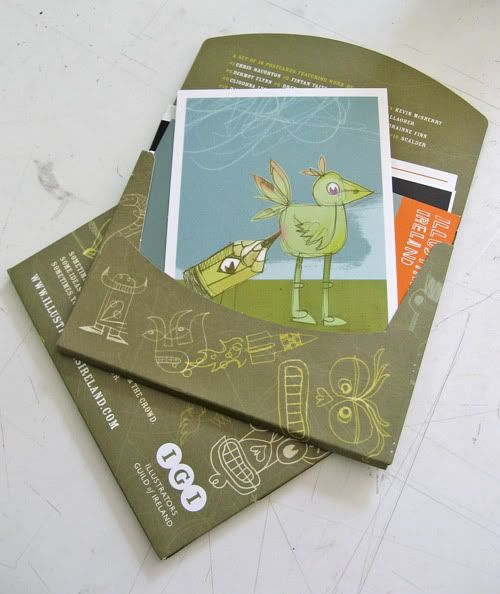
If you're an art director in one of the leading UK ad agencies, design studios or magazine publishers you just might have received this wilful and uppity little pack of promotional cards recently, featuring 16 illustrators from among the ranks of the Illustrators Guild of Ireland.

I'm in there - and a bunch of my character dooooooods also adorn the pack itself, design courtesy of Artisan. If you haven't received one - and would like to..............tough - the whole print run has been sent, I'm afraid! But maybe drop the IGI a line, so they can include you on their next mailout - or maybe even invite you to some snazzy illustration-related event. Or not.

Scamperville Rendevous


Some nice stuff going up over on the Scamp blog these days.

Parp, Parp! (that's my own trumpet, you know).

Seriously though - I've some images over in this posting of recent work by IGI members and also in this posting of 'scamps' to 'welcome' our new 'leader' at the 'helm' (enough already!).

Also posted is a link to the fantabulous new website by fantabulous Irish illustrator Alan Clarke. I'm jealous of both the work and the snazzy website. I should get me one of dem lads. maybe. sometime.

Tuesday, May 06, 2008

Dublin Writers Festival 2008


Whoooop again! I've just been perusing the excellent line-up for this year's Dublin Writers Festival and have already booked my tickets for this event: Tobias Wolff and Anne Enright - Small Wonders: The art of the short story.

Tobias Wolff is probably my favourite living writer, in a lineage running from Hemingway - (I know, I know) - via Carver, so I'm hugely excited at a chance to hear him read / speak / whatever. Coupled with the currently omnipresent Enright, it should be a very interesting evening indeed. Plenty of other cracking events in the line-up, including some kind of evening with JP Donleavy? Pardon the confusion - its just that the programme blurb doesn't give much inkling as to what format to expect other than a 'special retrospective'? I'm a longtime fan of Donleavy's short stories and of The Ginger Man novel in particular, but have to admit I've found his increasingly 'stagey' persona somewhat cloying in latter years. Here's hoping the feet-of-clay factor doesn't come into play with Wolff.

I've pipedreamed before about attending the Creative Writing Program at Stanford, where not only Wolff, but Eavan Boland are on the Faculty (Colm Toibin has been a visiting lecturer there too, apparently playing a part in getting poet Brian Turner to Ireland after seeing him alongside Wolff, at an anti-war reading). So I noted with interest that Wolff's close contemporary Richard Ford has been signed up as adjunct professor in the School of English in Trinity College, Dublin. The Pulitzer Prize-winning novelist and short story writer will teach students of the MPhil in creative writing at the Oscar Wilde Centre for Irish Writing. There are some core similarities between the two Americans - Ford's lineage running a little more southerly, out of Faulkner and Flannery O'Connor. I've relished his short stories, but haven't been as enthusiastic as the broader audience about his Frank Bascombe trilogy. Having read the first book, The Sportswriter, I had enough of Mr. Bascombe to last me for quite a while. Not sure what that means - if anything. I'm sure I'll move on to the other books in the future and I'd be interested to hear what anybody out there thinks of these books - what am I missing here folks?

Wednesday, April 30, 2008

Blogspotting!

A quick runaround some of my current online haunts reveals:

A NICE OVERVIEW OF CÚIRT on Nuala Ní Chonchúir's blog.

A RUNDOWN OF THE WINNERS of the Hennessy New Irish Writing Awards ( including links to shortlisted work) over on the Emerging Writer blog.

A NICE MIX OF POETRY AND PHOTOGRAPHY on Mark Granier's Lightbox blog.

Patrick Chapman's fourth poetry collection A SHOPPING MALL ON MARS is out now!

UK poet Matt Merritt blogging about his new collection TROY TOWN.

All well worth a gander!

Penpusher 9 - The Bees' Nibs!


Whoooop! Just received my copy of Penpusher magazine, issue 9 in the post, and it's a thing of beauty! Beautiful layout & typography throughout, crisp black text and snappy two colour cover on high white uncoated stock with a nice bit of weight - all perfectbound into the definitive 'slim volume'. Full credit for immaculate design to Hape Mueller. In Googling for the designer's website (which I couldn't find!) I came across this bizarrely interesting tidbit, crediting Kaiser Chiefs frontman Ricky Wilson for the magazine's distinctive logo! What a small, funky world it can be.

Anyways, on first skim, the editorial control and overall content well merits the very high production standards and I'm chuffed indeed that my poem 'Salthill, Monkstown' features alongside some quality material in this issue. Thanks Penpushers, you've made me week!!!

Hearmerooarrrrrrrrrrr!


BMW are running a promo campaign at the mo for the highly desirable Mini around the theme of 'Hear Me Roar!' you can check out some of my work for the campaign here along with work by BrenB, Chris Judge, Joven Kerekes and a bunch of other spiffing diddlers. Grrrrowwwwsa!

Thisisnotashop


This bizarre exploding chickenguy is a mashup by artist and designer Robert Carr of one of my doodles with a photo by Jessamyne Fiore. It featured as the cover graphic on the recent programme for Thisisnotashop gallery in Benburb Street, Dublin 7 - a real sweet artspace. They've been invited to participate in ART 08 over at the RDS this May. Based on last year's show there it should be areal hot ticket and well worth a visit. Git! Go! Getalong little Dawgies!

And check out the newest Thisisnotashop programme too - featuring a tres chilly graphic by designer John Lambert, aka electronica plucker Chequerboard. Tastic!

Sunday, April 27, 2008

Gillian Lawler at The Cross Gallery


Gillian Lawler is one of a new generation of young Irish painters who manage to bridge tradition and the demands of an art audience for whom working in paint is verging on anachronism – a falsehood, of course. It is to the credit of the Cross Gallery that quite a number of these painters have been associates of the gallery since it opened its doors in 1999.

I’m thinking specifically here of Sonia Shiel and David Begley, as well as Lawler. Each of these artists can be seen to have re-assessed traditional, if not classical, inspirations in recent years by bringing their own slants; Begley to the human figure, Shiel to the natural landscape, and now Lawler to the urban. All share a love of surface and the materials of the painted medium.

Gillian Lawler’s work first caught my attention with compositions redolent of drumlins or magmatic bulges, seemingly landscape based, but very stylised. However, the decisively appeal for me was not so much the organic geometry of the compositions as the wonderfully worked patina in which they were rendered. There was no hint of that ethereal clouding into abstraction that so many landscape-based abstracts choose to wrap themselves in. Here was a determined and interesting, regimented deterioration of composition and painted surface – allowing the underpinning drafts to become something worked intensely into existence.

Then, last summer, Lawler was awarded the prestigious Hennessy Craig Scholarship and The Whyte’s Award at the 2007 RHA Annual exhibition for work which had moved on from the organic curves of previous sources to embrace grid elements and areas of carefully underplayed brighter pigments, bringing a fresh momentum to her destructed grounds.

The current exhibition develops these elements further. While some organic curves reappear, they are as ambients to those grid-based elements which have now moved assuredly to a dimensional centre stage in all of the compositions on show.

The most striking piece, to my eyes, is a large canvas named ‘City on Stilts II’. Here, cuboid forms merge to a distressed, melded plane – calling to mind medieval cities, antique cabinets as well as some possible future tribal habitat. Dominent colours here are the eroded complementaries of Indigo and Apricot (also reminiscent of Shiel’s pallet) but with an aging influence of pale verdigris. A ground of parallels suggest municipality, tillage and the corrugation of machine processes. All is quiet however, the stillness of early morning in the city, or rather of the city viewed from outside.

Herein lies a key strength of the work on show. Each canvas presents a sense of an environment observed, as if by a cultural outsider – but which also realises itself as a contemplative inner vision. Where are these places – within or without? Who resides in their viewing?

Other standout works are a large ‘Untitled’ canvas, which calls to mind a timeworn apartment or office block, but also resembles some metaphysically chainsawed woodblock in its iteration of negative grid spaces. Of the medium sized canvases, ‘Tower II’ encapsulates that sense of ‘inner habitat’ as it’s subject suspends between ‘ground’ and ‘sky’ of questionable logic. All are rendered with love of surface that fuses deterioration and destruction with wonder and beauty.

Overall this is an excellent show by a painter who seems to have found her own ‘third place’ between tradition and the new. Larger pieces are fulfilled with no loss of craft compared with the medium sized canvases more familiar to me from past work. Despite the emphasis on ‘modern building developments’ in the artist’s statement and the description of ‘primarily abstract meditations on the possible long-term rise and fall of cities’ – I find these works resonate with deeper instincts. In perusing the common planes and surfaces of the urban human habitat, it seems that Lawler is triggering the locks of inner rooms and perspectives.

The exhibition runs until 3rd May. An edited version of this review appeared in the Evening Herald HQ magazine of April 24.

Wednesday, April 23, 2008

Heaney Wright Review on Poetry Ireland


Those good people over at Poetry Ireland have seen fit to pop my review of the recent CD Wright & Seamus Heaney reading from DLR Poetry Now 08 up on their guest blog. Thanks PI people! I'm in good company over there - and the guest blog is just one of the nice features of www.poetryireland.ie, along with the forum, irish poetry news etc. Well worth a wander!

Tuesday, April 22, 2008

God of Shopping


Hey - checking out the upcoming festival line-ups reminded me of this - an artwork I painted for the SPOKEN WORD exhibition at last year's Electric Picnic. Based on that old chestnut about how 'We went Shopping for God, and found the God of Shopping'- I think its originally attributed to a certain Leonard Alfred Schneider? If memory serves, a sample of same features in a track by The Disposable Heroes of Hiphoprisy? Oh, the fuzziness. Anyways, this here piece of art now rests in the private collection of goodbuddy Joven. Enjoy!

Monday, April 14, 2008

Poetry Now - The Strong Award


The Rupert and Eithne Strong Award is presented annually to recognise first collections published in Irish or English by Irish presses or poets. The presentation, and accompanying reading by shortlisted poets, has become a fixture of the Poetry Now festival and provides a valuable opportunity for emerging poets to give voice to their work in a supportive and knowledgable environment. Many speak of the affirmation this offers along with the opportunity to reach a new audience, as well as mingle with audience, peers and influences during the festival itself. Nerves were undoubtedly fluttering backstage as this year’s judge Louis de Paor took to the stage to begin proceedings.


As one of Ireland’s leading Irish language poets and Director of Irish Studies at NUI Galway, it was little surprise that de Paor announced himself ‘dismayed’ at the fact that only one Irish language collection featured on this year’s list. Another concern was the rigour, or lack thereof, of editorial input by the publishers of this year’s crop of emerging writers – whether referring to the quality and choice of content or the fundamentals of proofing wasn’t made clear. His final concern was with the nature of poetry predominently featured, with a perceived emphasis on the shorter, mostly lyric form to the exclusion of other approaches, including that type of poem which ‘brings you for a walk in the woods’ before revealing its intent. It was refreshing to hear constructive criticism where one might have expected platitudes. Then it was time for the first reader.


Nell Regan’s collection ‘Preparing for Spring’ has previously been shortlisted for the Patrick Kavanagh and Glen Dimplex New Writing awards. Her work has been praised for its precision, sophistication and tact. On the basis of this reading, that praise seems at least partially correct, with a definite sense of precision and craft on display. However, treatment of certain subjects, such as the Blaschkas (a family of skilled zoological glass model makers) and the muslim call to prayer, seemed a little lacking in that other area of tact. The subjects at times felt observed, rather than identified with – that old colonial sense of the exotic ‘other’ shadowing proceedings just a little. Work with its basis in personal history, seemed more considered. No doubt the obligation of reading first, in this context, was testing and it is possible that nerves played a part in leaving me a little cold on some of the poems. However, there’s no doubting the skill of construction in these pieces and I’m sure to warm to her work on further reading.


Next up was Nuala Ní Chonchúir, reading from ‘Tattoo ; Tatú’, her bilingual collection from the same publisher (Arlen House) as Regan. Here too was craft and precision aplenty - but this work, I felt, was backed up with a deeper investigation of self, with the investment of that self in the crevices of skillfully constructed poems. This poet has been praised as having a ‘Chekhovian eye for detail’ by Cathal Ó Searcaigh - an assessment I’d be inclined to agree with (even if the source has been dogged by controversy of late). Stand-out works for me were ‘Our Lady of Dublin’, a somewhat gothic rumination, with nice prior context given for its striking line ‘even this crown is not my own,’ as well as the title poem, with its imaging of the body as a palimpsest of prior lovers. So far, so graceful.


Our next poet’s collection won the Patrick Kavanagh Award 2005 in manuscript. Reading from ‘The Boy in the Ring’, (Salmon Poetry) Dave Lordan displayed feisty, vernacular language and gave it socks, wellys and Doc Martins in his delivery. Lordan’s obviously no shrinking violet. Small town tales were vented with foam, fleck and fecklessness by “fuckin’ fearless” protagonists. Yet again there was doubt on my part in the rendering down of those mucksmeared characterizations of life in small rural towns to something approaching caricature. Invoking staples of rebellious adolescence - haircuts, hash and happy hooliganism - combined to deliver… nothing really startling, actually. The subjects of his poems are chewed out with a vigour which sometimes felt a bit like barrelfish-shooting to me – e.g. the pillorying of the flatbed concelebrants of "Entente Florale" – perhaps at the expense of the poems’ own insights?


Next, Billy Ramsell gave a reading which exhibited certain of the same characteristics as Lordan’s despite very different voicing and the fact that here, much work seemed recited from memory. Presenting work from ‘Complicated Pleasures’, (Dedalus) Ramsell too seemed in danger of subverting the impact of his texts with a performance style which drew freely on audience interaction, asides, anecdotes and the like, going somewhat beyond the usual realm of establishing intimacy, calming nerves and setting contexts. (I’d estimate the ratio of poet to raconteur in the region of 1:2?). Indeed he revealed that, when faced with a microphone, his first tendency is to sing – at one point proposing a rendition of The Lakes of Pontchartrain! (…which clearly would have been well received by the Festival Curator, who proclaimed it her favourite song in wrapping up this event). Perhaps thats no bad thing in itself – we’ve all been at those readings of slumber-inducing, buttock-numbing monotonal bardery. But, while fresh voices need fresh approaches, I can’t help but feel there’s sometimes a cost to the work.

So then, on to the denouement. Reiterating his earlier comments about the high calibre of these four collections, de Paor announced, with the minimum of fuss, that this year’s winner of the Strong Award was the collection which had ‘made me me forget I was reading a book of poetry.’ Dave Lordan returned to stage to accept his award. Rightly pleased, he proceeded to invoke the I Ching, allowing the audience to choose the page number for a final poem. ‘64’ it was - then off to the wings (of glory) for him and the chill streets of Dun Laoghaire for the rest of us.


A final tangent - from which I can draw no specific conclusion - relates to poetry and publishing undergoing dramatic (!) transformations in this era of rapidly changing information technology. Of the collections featured in this year’s Strong Reading, the one I will soon buy (my festival book budget was blown on US poets) is, coincidentally, the title from the poet who maintains the most comprehensive online presence - Nuala Ní Chonchúir. ‘Tatoo : Tatú’ is my own Strong choice this year - purely my personal taste, of course, but with the added incentive of finally daring to consider the possibility of writing in my native tongue. After all, if I can coach Henri Cole in the pronunciation of ‘a dhaoine uisle’, perhaps there’s still hope for my inner gaeiligóir. Slán!

Wednesday, April 09, 2008

Revival 7 Launched


The launch of issue 7 of Revival takes place today, Wed 9th April 2008 at 9.00pm at the White House, Limerick. Unfortunately I'm stuck in Dublin due to work, but I'm willing good wishes all the way to Limerick, where those good people, the WhiteHouse Poets, make good things happen on a regular basis. I'm delighted to have my poem 'The Cormorant' included in this issue of Revival and my good buddy Stephen Farren from the Poetry Ireland forums has a piece in there too, I believe. looking forward to getting my hands on this! Copies are now available at €7.00 and you can purchase or subscribe HERE.

DLR Poetry Now 08 Highlights


Well now, what an excellent few days! A hearty well done to all concerned.

Standouts for me were:

Ruth Padel’s keynote address


Comparing and contrasting structures in Tennyson, Dickinson and Harsent, Padel took us to the building blocks of the poem – vowels. Vowels as the basis of syllables, thmselves in turn the basis of words and rhythms. She spoke eloquently on the role of vowels in unlocking our emotions – creating a syllabic sensuality of sounds – pointing out that we tend to sing in vowels – consonents being largely percussive.

Henri Cole Workshop

Despite limited time (we inevitably ran over) the twelve participants and Cole engaged very thoroughly over readings of a poem each, some of which were truely remarkable. Henri proved a pleasant and knowledgeable facilitator and shared his thoughts on personal language (…would you use that particular phrase over cocktails?) , the dangers of the demotic ( …wheelie bins, anybody?) , Epigraphs (…you want to start your poem at 20,000 feet) as well as some thoughts on Anaphora, Modifiers (as an exercise, delete them all from your draft!) and Enjambments. Particular poets were recommended as reading in the context of certain of these and other points (Hopkins, Stevie Smith and AR Ammons came up). A key theme was the balancing of ‘sonic technique’ so as not to clutter up the emotional intent of the poem.

Overall a wonderful opportunity to bend the ear of a “master poet, with few peers” to quote Harold Bloom.


CD Wright / Seamus Heaney Reading

I must admit I wasn’t very aware of Wright’s work prior to the festival. That’s all changed now. Described by some as an Elliptical Poet, the clarity, experiment and refined audacity of her work blossomed in her vocalising. Language Poetry is another term that has been applied to her work – and language here is certainly approached with vigour. A wonderful, bracing reading which had the hairs up on my neck. And then came Heaney! Peter Sirr made reference in his introduction to ‘Seamus Heaney, pursued by Seamus Heaney’. When the Man Himself entered, stage left, he was always going to be chased by the ‘bear’ of his persona and reputation to some extent. However, Heaney is a longtime friend of this festival and intimacy was quickly established with a puckish grin. Referring briefly to his recent ill health (and full recovery) he then proceeded to give a masterclass with a thematic and considered reading of select recent work. With poems from 'District and Circle' to the fore, he finished his reading with ‘The Blackbird of Glanmore’, a favourite of his own and, I’d guess, many of the audience – who gave our 'Chieftain’ (Wright’s introductory word) a warm and emotional ovation. A startling, yet moving event – a tribute to the power of poetry and to this valued poet in particular.

So, just a few of the highlights from a truely special few days. And I haven’t even mentioned the roundtable discussion on current trends in the publishing and reading of poetry, the visceral charge that was Brian Turner reading from his collection ‘Here, Bullet’ and the varied delights of the Strong Reading, with the Strong Award won by Dave Lordan, for his collection The Boy in The Ring. Yet.

Saturday, March 15, 2008

test post

this is just for testing purposes

Friday, February 29, 2008

Offyegonow folks!


ok dat's enuffa dat - move along please - nuttin to see hear - gwan now, have yez no weekends to be goin to - along ower dat de lotta yeee.

Monday, February 25, 2008

The Oul' Howl


Here's one for fans of UberBeat Allen Ginsberg - an online release for an early (1956) recording of a youthful Ginsberg reading a draft of Howl at Reed College, Portland, Oregon. He runs out of steam a bit near the end - but, be the hokey, its an amazing archive piece of this definitive poem of the modern era in all its protopsychedelic glory. Enjoy! With thanks to Barry Miles over at the Guardian Arts blog.

Tuesday, February 19, 2008

Multitasking Creativity?


'A way with words and a gift for illustration rarely inhabit same brain.'
Is the theme of an article by John Keenan over on the Guardian Arts Blog. Do you agree? I don't think so. The fact is that many writers, visual artists and indeed, musicians display talent to a high level across a number of these creative roles.
Dr. Seuss, Hunter S Thompson, Miranda July and Dorothy Molloy come to mind.

The initial surge of creative expression, however, traditionally needs to be focussed in order to achieve outstanding results in any given discipline. This may result from the closely academic principles applied in 'linear' career development of artistic 'job descriptions' to date.

It is quite possible that we may yet see a new generation of 'renaissance artists' emerge from the cross-fertilisation of disciplines resulting from convergence technologies.

Remember, until relatively recently, many lauded creators weren't always fulltime, professional artists. Many lived a professional life that required energies, skills and commitments separate to their artistic pursuits. One benefit of new technologies is that these could now be brought to bear to make progress more efficiently in a number of disciplines?

Monday, February 11, 2008

Weekend Warrior


Hello. Welcome back. (Damn, talking to myself again!) Having been in absentia for a lost weekend that breached the space-time continuum, I now find myself..........ehhhhh, back. Here. Again. Cool. Stay tooned!

Thursday, February 07, 2008

Zadie a picky Lady?


Still looking towards the UK, there's been quite a bit of a furore over the decision by the judging panel of this year's Willesden Herald International Short Story competition not to present any prize this year. According to a blog post by judge Zadie Smith "We could not find the greatness we'd hoped for," and which goes on to say "It's for this reason that we have decided not to give out the prize this year."

The announcement has led to mixed reactions - plenty of disappointed entrants and other critics of the decision. But there's also some degree of support for the perceived upholding of literary standards.

It does seem odd that out of 800 entries, none was deemed of sufficient quality to win - especially when a shortlist of 10 had been compiled - but I guess it can happen.

I didn't enter, and may not have the chance now, seeing as the organisers have decided to donate this years prize to comic relief and wind up the competition! A bit of a shame what with the 'no such thing as bad publicity' factor at work.

Ah well, It's a funny old world. (Funny peculiar, that is).

Wednesday, February 06, 2008

2007 Plough Prize Winners


Over in the UK the results of the 2007 Plough Prize were announced earlier this week. You can see the winning poems and some comments by the judge, UK Poet Laureate Andrew Motion, over on the website. The quality seems very high and this may reflect the fact that the competition offers a high level of respect to all poets who enter.

EVERY poem entered got a tickbox critique, and for a small extra fee, a full critique is also available. I like this! Most poetry competitions have a stated aim to support and encourage poets – but the offer of even limited critique is rarely on offer. Sending work (along with the usual ‘entry’ fee) only to have it disappear into a limbo, unless one of a handful of prizewinners, can at times be more dispiriting than encouraging!

I can understand the administrative issues involved in providing a critique service – but even offering the option for a small additional cost would be a welcome development in many cases. I hope to see this becoming more the norm over time.

Meantime enjoy the poems – I particularly enjoyed Still Life by Alex Porter. Thanks to Matt at Polyolbion for bringing this to my attention.

Tuesday, February 05, 2008

The Poetry Programme


There’s a new voice at the helm over on RTE Radio’s poetry programme.

Gerald Dawe, a fine poet in his own right, has taken over from Pat Boran and I had the chance to hear him in action for the first time at the weekend (The show goes out Saturday evenings at 7.30 pm on RTE Radio 1). His guest this week was Frank McGuinness, who has a new collection of poetry out at the moment. Dulse is published by the Gallery Press and is, I believe, McGuiness’ fourth collection of poetry.

Of course, McGuinness is much more well known as a playright than a poet, with plays such as The Factory Girls and Observe the Sons of Ulster Marching Towards the Somme to his credit. So it was interesting to learn that his published writing began with a number of poems back in the seventies, which lead in time to his first collection Booterstown being published in 1994. By his own admission, writing plays took over from poetry pretty early in his career and published poems have been more sporadic up until more recently. You can hear that show here, and there’s an archive of past shows available too.

Next week’s programme features Professor of Poetry for Ireland, Michael Longley, one of this island’s outstanding living poets and should be well worth a listen to hear the two Belfast boys chew the fat. Best of luck on the airwaves, Mr. Dawe!

Sunday, February 03, 2008

Happenstance – well happening!


I came across the poetry chapbook publisher Happenstance Press a little while back, through the unlikely channels of ...yes, it's true... another blog!

Matt Merritt
is a fine UK poet, based near Leicester. A keen birder (twitcher, avian maven, what-have-you) his work is a real find. He writes with a naturalist’s eye on the beauty of rural environments, peopled with dignified species (including our own!). His painterly landscapes resonate with earthed rhythms in poems such as The Creek and Walking The Horseshoe. But the real pay-off, for me, is the keen regard he brings to human relationships, in precisely crafted pieces like Directors Cut, To Be Honest and Twitch. He keeps an excellent blog and is well published at this stage, with a collection due out this year. His chapbook Making the Most of The Light is published by and available from Happenstance Press.
Primarily a poetry publisher, Happenstance also runs a short story competition and you can order their pamphlet containing the first, second and third place stories along with one commended story, from their online shop. The stand-out piece for me was the story Going Out by Katy Darby. I won’t say where it came in the placings, but for a measly £3 + p&p you can find out yourself – money well spent! In the light of the apparently haphazard cuts in Arts Council England funding, small UK publishers like this need the support of punters more than ever. Why not do your bit and buy a title or two. Better still, take out a subscription to their regular journal Sphinx, which generally contains a variety of insightful articles on the vagaries of publishing poetry by folks at the coalface.

Of the titles I’ve bought so far, the standard of both content and design make spending a few quid well worth while. Check it out (and order Matt’s chapbook while you’re at it).

There are plenty of Irish poetry publishers who produce the goods in difficult and far-from-wealth-generating circumstances too – so don’t forget Lapwing Poetry, Salmon Poetry and Daedelus to name but a few. For the price of a mediocre bottle of wine you could give your spirit a kick that may still be intoxicating and inspiring many years from now!

Enright on the night!


Back to the Pavilion Theatre again earlier this week for a reading by our local Booker winner Anne Enright. (After this no posts about either Enright OR the Pavilion for a while - promise!) The event was held as a fundraiser for the ‘Out-Back’ project run by the Pavilion, where Enright’s husband Martin Murphy is Artistic Director, and it proved to be a very interesting and enjoyable evening, with Enright’s good friend Gerry Stembridge doing the introduction and interview duties.

If you're not Irish (and of a certain age) Stembridge may not be the most familiar name – but round these parts, he's probably most well known for his role in writing the infamous radio programme Scrap Saturday, which ruthlessly pilloried the most heinous and ridiculous excesses of the regime of a certain Charles J Haughey, formerly of these parishes. The show was notable for skillfully skewering topical political idiocy, and featured prominently the wit and mimicry of the late Dermot Morgan (sadly gone from this world almost 10 years now!) and the not-in-the-least-late Pauline McGlynn, both of whom went on to great things on Craggy Island. (While I think of it, Father Ted co-creator Graham Linehan has an excellent new blog over here - well worth a visit for choice fillets of the festering corpulence that is internet video - check it!)

But I digress; Stembridge began the evening with a few vignettes and memories of his friendship with Enright down the years. He recalled, on Booker night itself, emerging from the shower in the mens locker room of his local gym and being confronted by a grandee in a tux mouthing the result on a silent TV as Enright was announced winner of the prize. As he put it, a one-off life experience, i.e. hearing your friend has won the booker while standing naked, dripping wet. Another memory recalled the time he saw a spotlit Enright, performing onstage in Dublin's Players Theatre several decades past, then rushing to Burgh Quay to submit his meagrely-paid review of the production to a certain desk editor by the name of Banville. Caught between booker-ends, as it were. He also spoke warmly of Enright’s generous and spontaneous support at a difficult period in his life – painting a picture of a warm, caring individual whose friendship was obviously highly treasured.
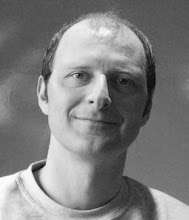
After these mellifluous introductions, The Author Herself took to the stage, receiving a prolonged and hearty welcome. Perhaps a little nervous initially, she soon settled into reading the opening chapter of The Gathering in fine style, followed by an even more compelling reading of her short story 'The Girl Died' from her forthcoming collection (available in March). It was immediately apparent how important the concept of ‘voice’ is to the success of Enright’s work. In this context, Enright’s own voice walks her characters right into the theatre and straight up to centre stage. I look forward to the new collection – it should be a treat!

Following another warm reception for her readings, Enright settled into her seat for some insightful quizzing by an obviously enthusiastic Stembridge. Both writers seemed to relish the occasion and the opportunity it presented. It could be that Enright was glad of a chance to address some of the misconceptions written about her in various wayward articles since her Booker win.

Much of the questioning centred on structural aspects of The Gathering itself, the Booker Prize awards night (apparently she didn’t bet on herself!) and more generally, Enright's working methodologies. Responding to a question about the size of the family in The Gathering, she recalled a comment of another friend, journalist Ann-Marie Hourihane, likening aspects of 1980s Ireland to an orphanage – where many siblings from these large families were left somewhat bereft, following the death of parents whose harried life’s work could, by material necessity, verge on emotional absence from their (too?) many offspring.

Interesting to hear too, how visual artists were to the fore as inspirations in the absence of a canon of pre-eminent women writers in the Irish literary tradition as her own writing developed. Artists such as Dorothy Cross, Alice Maher and Kathy Prendergast were mentioned as influences and it seems apt that such interrogative artists should be referenced by a writer whose own acts of creation are equally charged with robust questioning of their environs by her characters.

Finally, still another Banville-related comment which sticks in the memory is how, on meeting that writer following his own Booker win with The Sea, he told Enright how he originally didn’t believe that book was any good – not just to win awards, but that he was convinced his publishers would reject it for publication! Perhaps it was just that most Irish trait of false modesty, but I really can’t see Banville being self-deprecating purely for the sake of it. That meeting, of one past winner and one who would, took place aptly enough in an airport. Banville commented to Enright that post-Booker, life was lived in airports. It is to Enright’s credit, and the enjoyment of the Pavilion audience, that she spent last Tuesday in closer proximity to the ferry terminus in Dun Laoghaire – with presumably only a short trip back home to Bray!

Monday, January 14, 2008


New Year Haiku

Last year's clocks seem blurred
but sharpened resolution
reveals - more seconds!

© PJ Nolan November 2007

Monday, December 10, 2007

Scalderville Rendezvous


Photo: Pat Maddock and Eamon Wall at Scaldy Detail 2007 Launch


An enjoyable night was had last Thursday night, December 6th, at the launch of the 2007 edition of The Scaldy Detail, a journal of Wexford writing.

The launch was held in Enniscorthy's 1798 Centre and Editor Eamon Wall was back on home turf from his post at the University of Missouri to meet, greet and chat with contributors and friends of the journal. Renowned Wexford playwright Billy Roche did the honours, launching the publication with enthusiasm for the quality or work contained within.

The Scaldy Detail is published by Scallta Media, an artist-orientated publishing house who are keen to form further collaborative partnerships - why not drop them a line? Niall Wall and Paul O'Reilly of Scallta were on hand, both extremely modest about their respective roles in this excellent journal coming to fruition. Watch this space folks, there's an exciting energy in the Wexford air these days!

For my part, it was a pleasure to finally meet up with Norman Darlington in person. A regular on the Stinging Fly discussion forum, Norman read a Renku 'She Brings Me Smoke' (Renku being a traditional japanese form, written in collaboration). Mogue Doyle read his new story 'Fruits for the Widow Flynn' in that distinctive voice of his. Pat Maddock and Betty Thompson also read; two fine poets whose work I wasn't familiar with before this, but whom I greatly look forward to reading more of in the future. The poems of John Kelly were also striking, particularly the bittersweet tone of 'Whispering In The Bebo Dorm'.

So much good work! Overall, the event was a wonderful opportunity to put names to faces, meet and hear some of Wexford's established writers as well as up-and-coming talents associated with the county. The Scaldy Detail is filled with wonderful prose and poetry (although there's a couple of mine in there too, I'm afraid). You can buy it here and it would make an excellent Christmas present for anybody with an interest in (a) writing, (b) Wexford, or (c) both of the above!

Well done to all concerned, and best wishes for the future!


Spat

The rain came in eventually
Misting over Dublin mountains
Filming over bricks and glazing
On the Georgian square.
The air had been mild
And dry until today

When Winter stirred to lift
And cock a teary eye at Autumn
Who, reading that look,
Lit out fast, shamed by gull invective
And the accusation of
Flapping umbrellas.

© PJ Nolan November 2007